


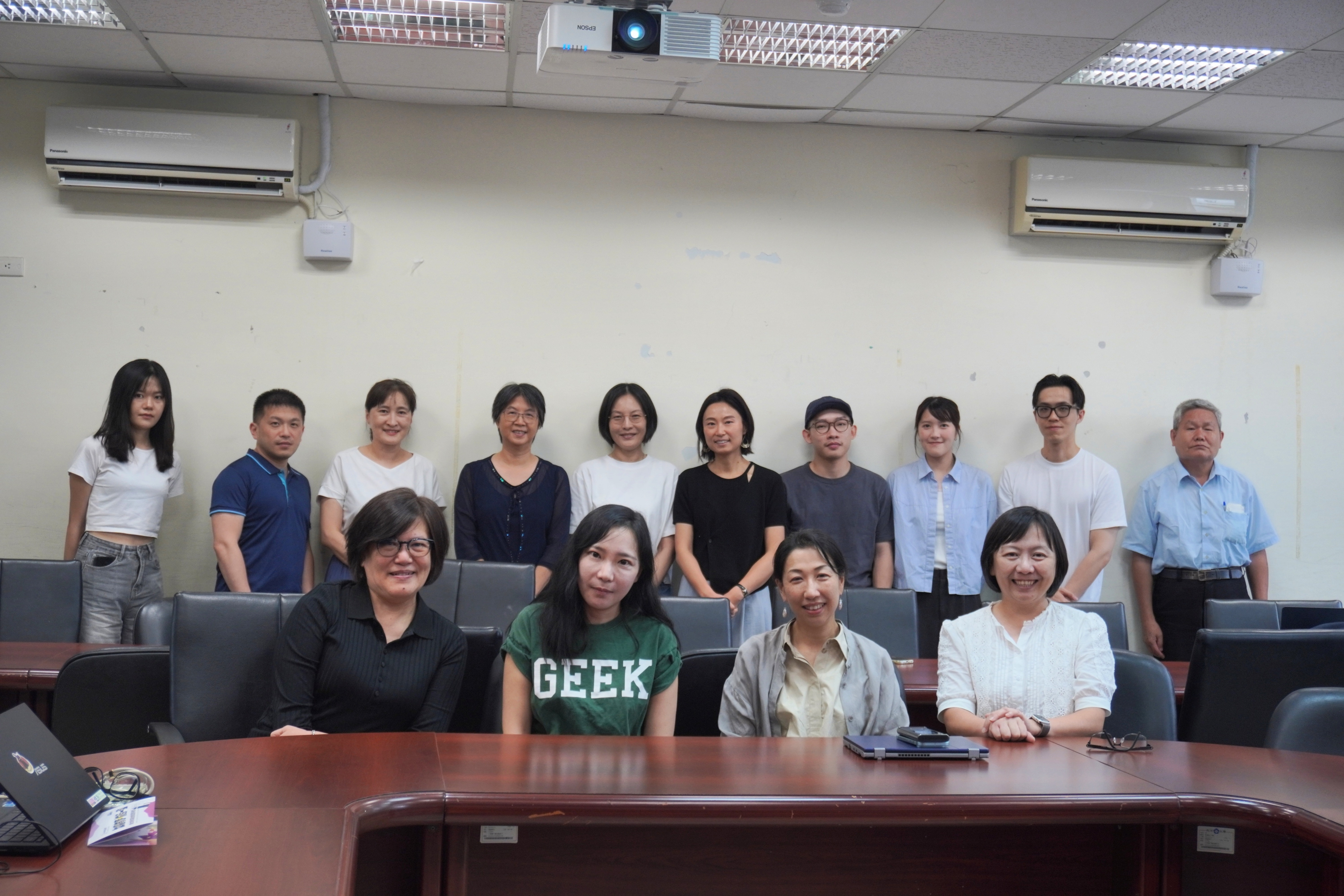
To foster academic exchange on gender and media culture between Taiwan and Japan, Professor Toko Tanaka of the Interfaculty Initiative in Information Studies at the University of Tokyo was invited by the Department of Journalism, College of Communication at National Chengchi University (NCCU), for a faculty-student exchange seminar held on May 29.
During the seminar, Professor Tanaka shared her observations on Japanese public discourse surrounding Sanae Takaichi, Japan’s first female prime minister, and discussed how Taiwan’s feminist movement—through its long-standing collaboration with LGBTQ movements—offers a valuable reference point for Japan.
The seminar was moderated by Professor Shu-mei Wang, Chair of the Department of Journalism. Professors Ting-yu Kang and Nien-hsuan Fang served as discussants. The discussion began with the political significance of Takaichi’s rise in Japanese politics and further expanded into the historical development of feminist movements, gender politics in digital media culture, and contemporary debates on transgender issues. Dean Hsiu-hui Sun of the College of Communication, along with Professors Yi-chieh Lin and Yu-fen Ko, attended and participated throughout the session.
Regarding public perceptions of Sanae Takaichi, Professor Tanaka noted a marked divergence between Taiwanese and Japanese interpretations. In Taiwan, Takaichi is often viewed positively due to her strong stance toward China and her public support for Taiwan, and is sometimes framed as a defender of democratic values. In Japan, however, feminist scholars argue that her political advancement should be understood within the context of existing patriarchal structures, and that her ascent to the premiership does not necessarily indicate substantive progress in gender equality. Tanaka further noted that such critiques often remain confined within ideological echo chambers, highlighting how contemporary feminist movements must now confront not only political constraints but also the fragmentation of public discourse on social media platforms.
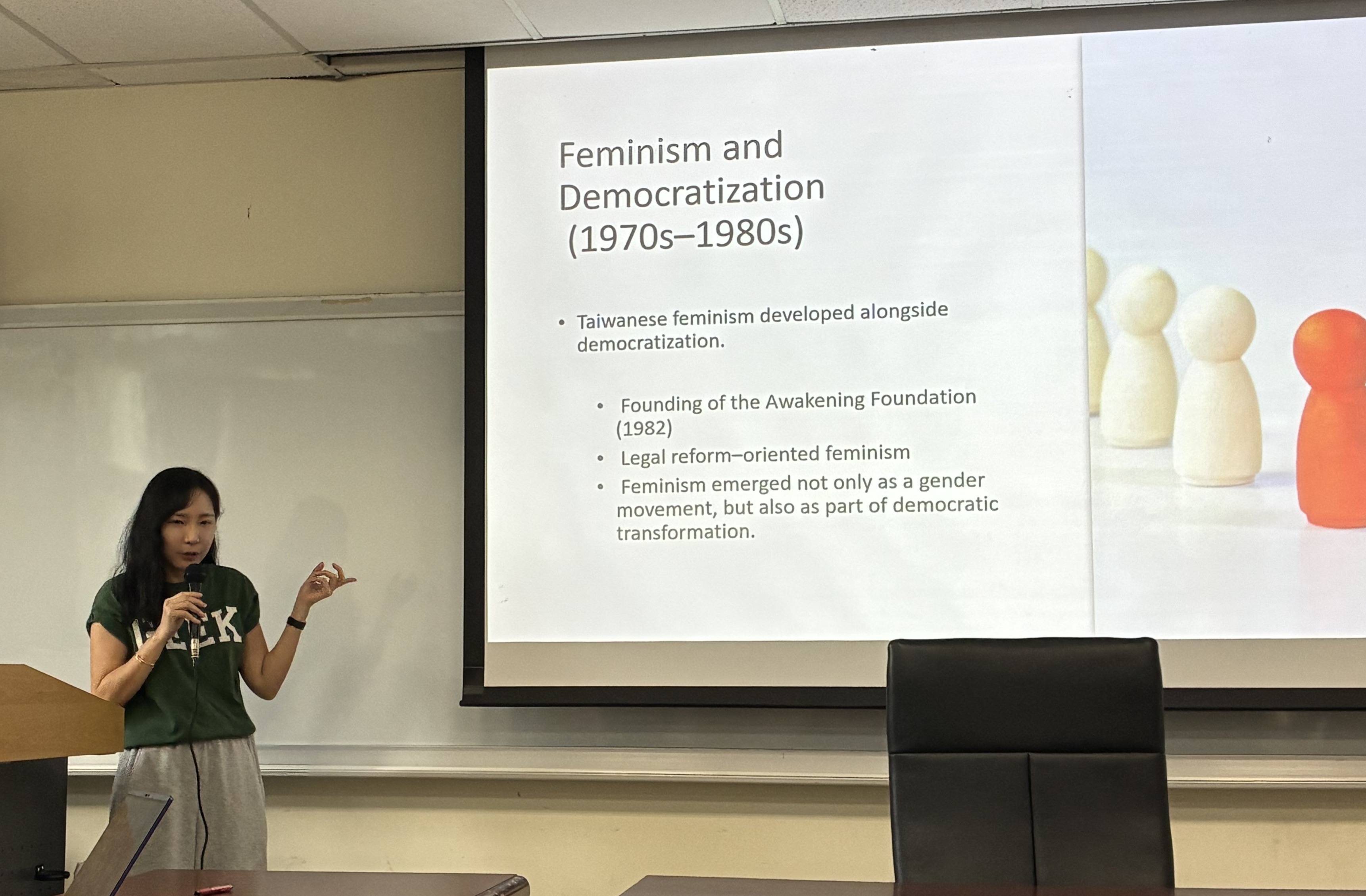
Professor Ting-yu Kang provided an overview of the development of Taiwan’s feminist movement, emphasizing its close relationship with Taiwan’s democratization process and its long-standing alliance with sexual minority movements. Emerging in the 1970s alongside democratization, the movement became increasingly institutionalized in the 2000s, as feminist advocates entered government institutions and contributed to landmark legislation such as the Gender Equity Education Act and the Act of Gender Equality in Employment. Since the 2010s, feminist activism has further expanded to address issues such as migrant labor, care work, intersectionality, and the challenges posed by digital media environments, where gender discrimination is often repackaged through memes and humor. The growing polarization of gender-related political attitudes among younger generations has also become a transnational phenomenon.
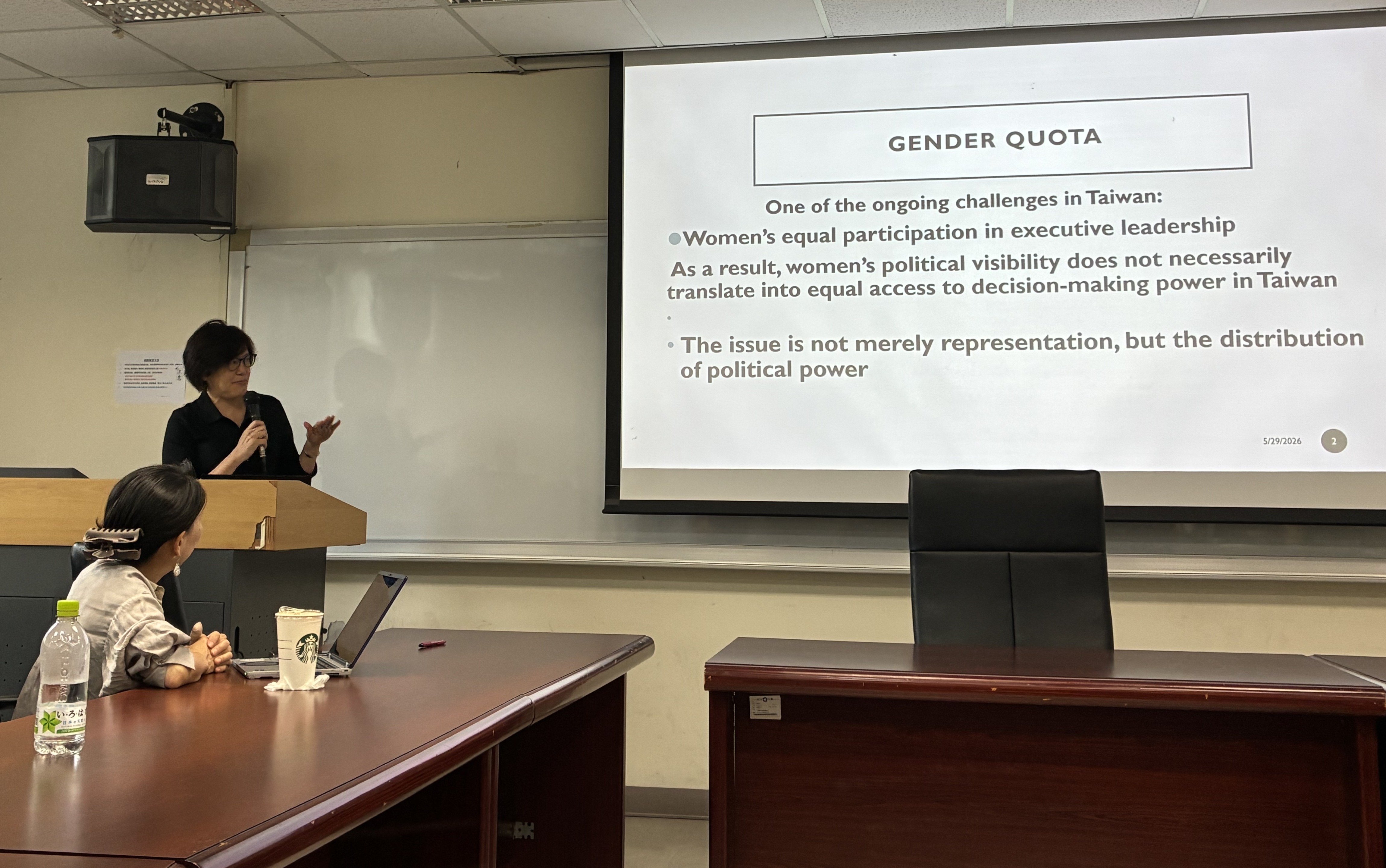
Professor Nien-hsuan Fang focused on the practical dimensions of feminist policymaking in Taiwan, emphasizing that numerical representation itself reflects underlying power structures. While Taiwan has elected a female president and appointed women to high-level governmental positions, increased visibility does not automatically translate into equal decision-making power. Following amendments to the Local Government Act, a minimum of one-third of seats in local representative elections must be allocated to each gender, demonstrating how institutional mechanisms continue to advance gender equality.
In the concluding discussion, Professor Tanaka stated that Taiwan’s long-standing experience of cooperation between feminist and LGBTQ movements offers important insights for Japan. All three scholars agreed that in an era in which digital media and algorithmic systems increasingly shape public discourse, establishing effective mechanisms for cross-group dialogue remains essential to the continued progress of gender equality movements.
